Handling Grain & Orientation Balancing Optical Consistency with Maximum Sheet Yield
Learn how rotation rules dictate cutting efficiency on brushed vinyls, holographic films, and textured media without sacrificing design aesthetics.
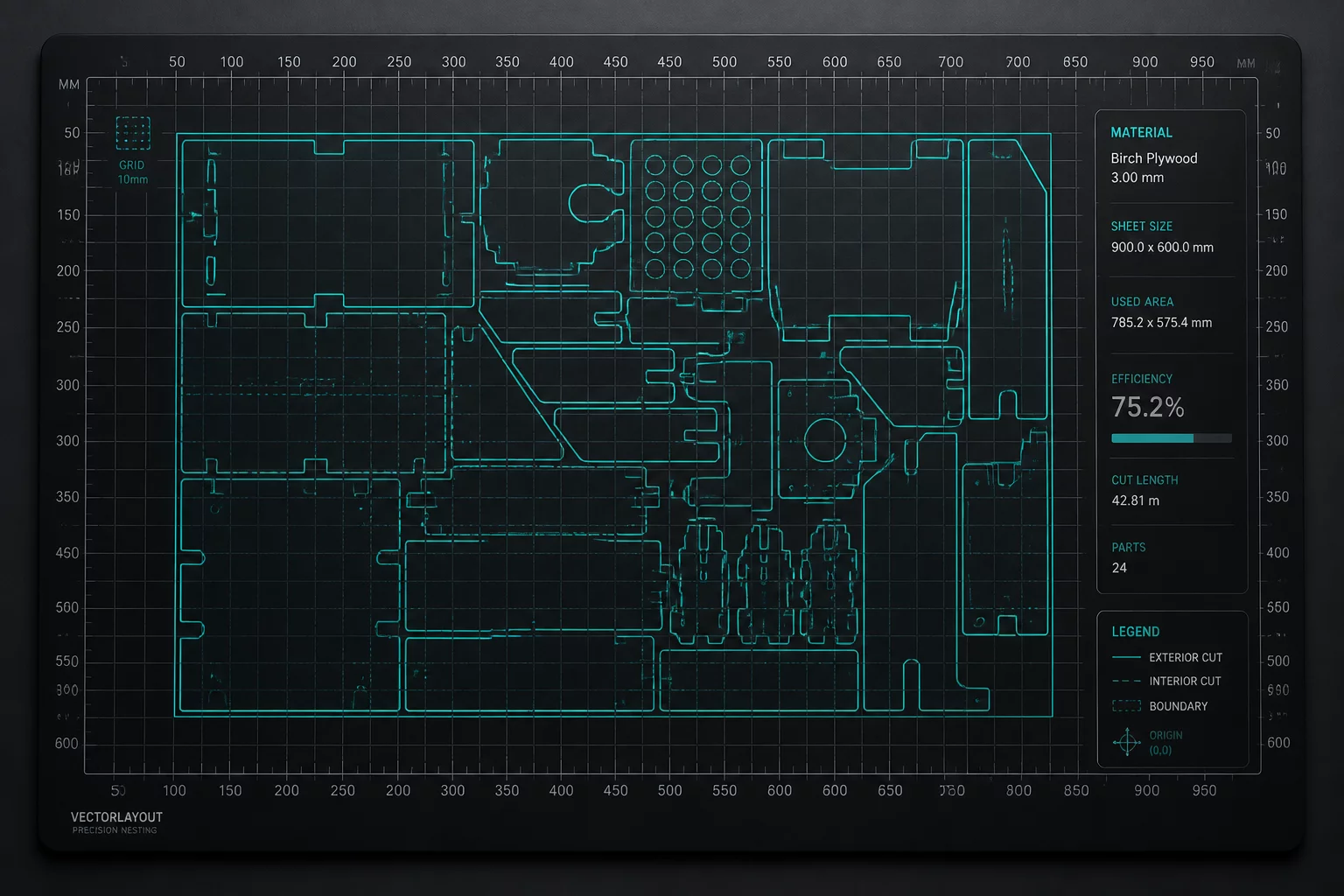
Solving Rotation Penalties Across Patterned & Grain-Locked Substrates
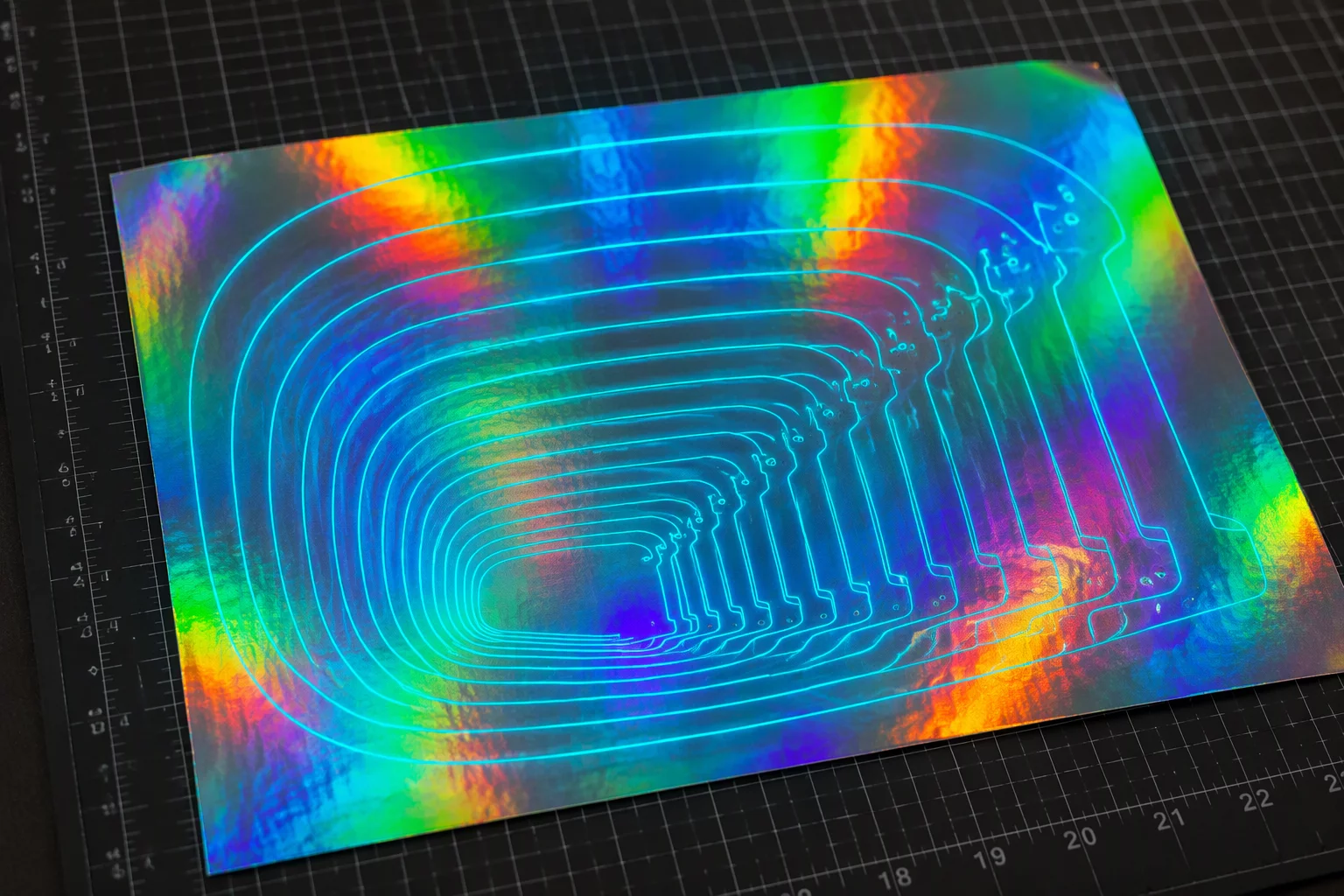
When cutting brushed vinyls, linear holographic foils, or directional composite media, unconstrained nesting algorithms cause unacceptable optical flaws. Explore technical case models to balance grain uniformity against material waste.
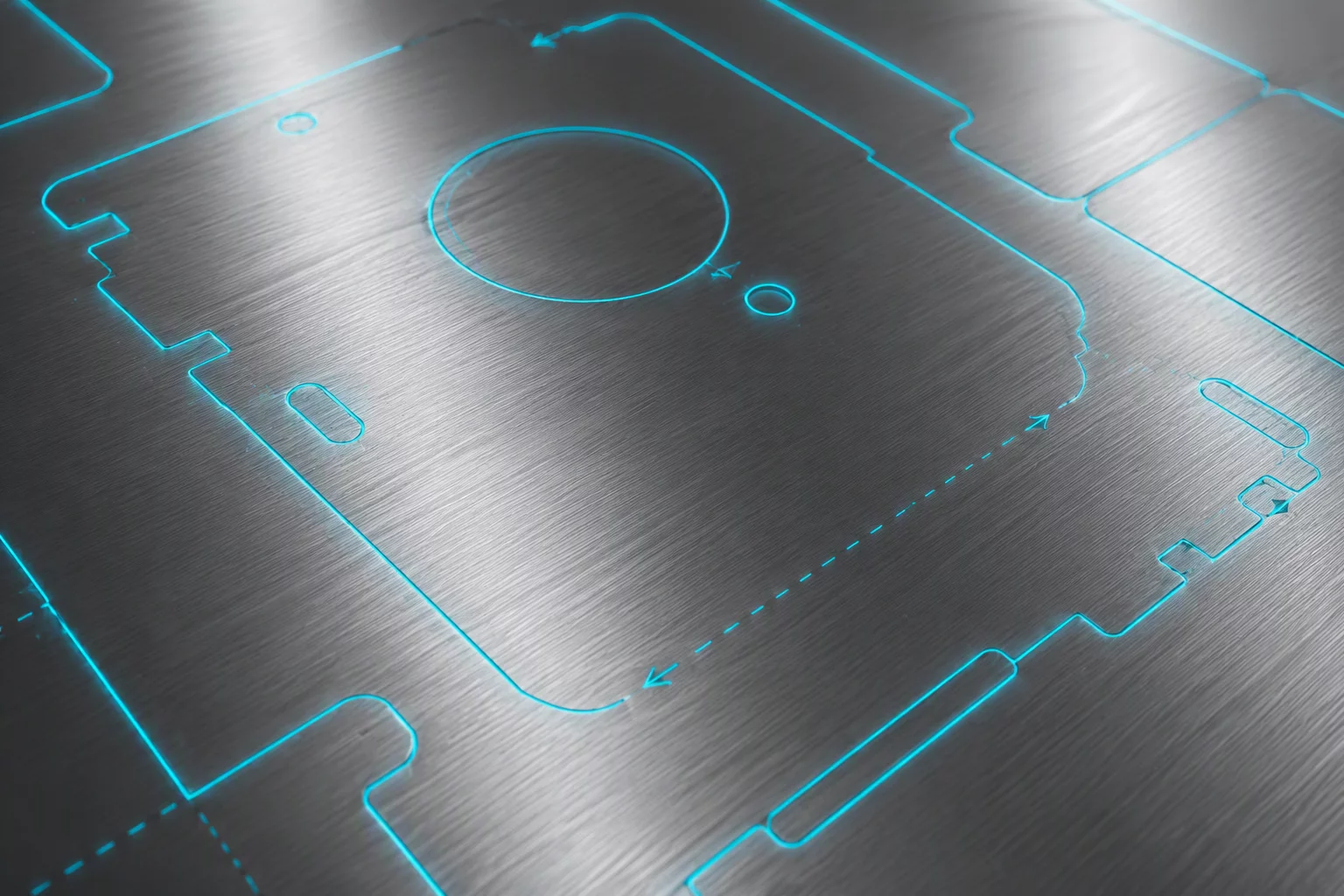
Case A: Brushed Metallic & Directional Weave
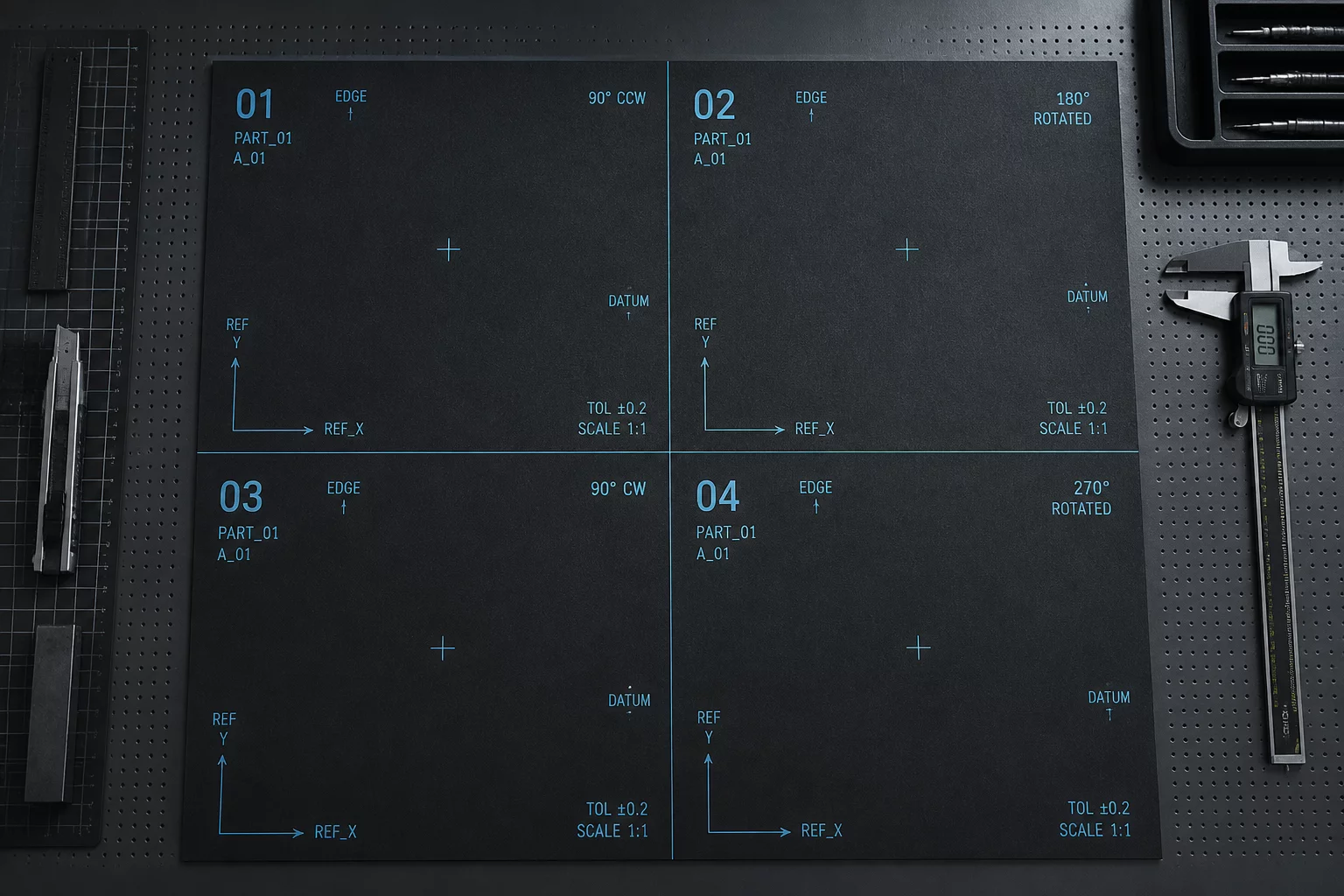
Brushed aluminum vinyl, carbon fiber textures, and woven thermal transfers reflect light along a single axis. Rotating elements by even 15 degrees makes adjacent decals appear to be completely different color shades under direct lighting.
Engineering Around Orientation Roadblocks
Practical steps when grain rules cannot be relaxed.
Hybrid Ganging Sets
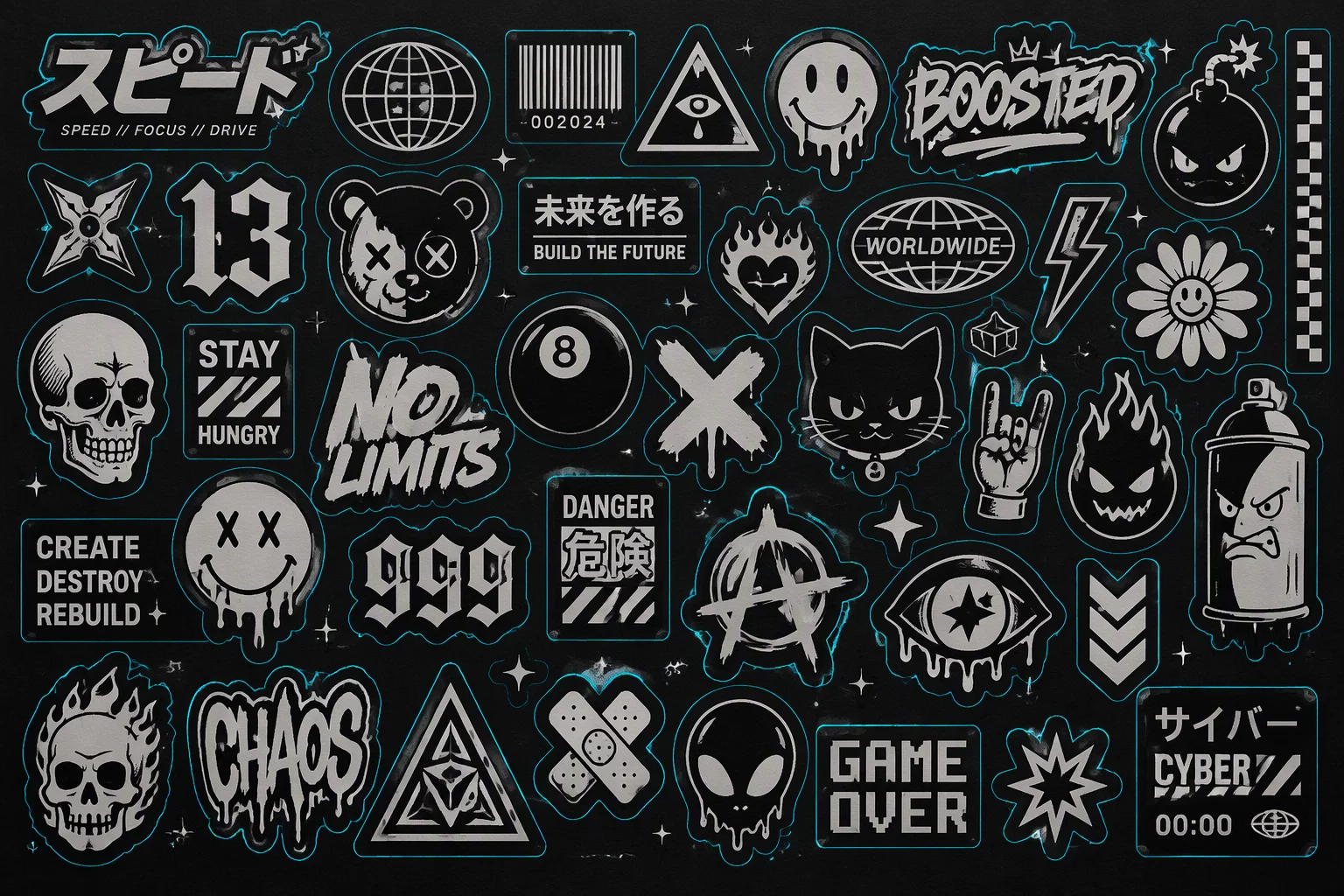
When running large grain-locked primary items, combine the job with smaller secondary graphics from the same material run to consume empty grid slots.
Kerf & Margin Tuning
Compensate for fixed rotation constraints by tightening blade clearance margins and pinch roller corridors down to mechanical tolerances.
Mixed Geometry Packing
Pair irregular organic contours alongside strict horizontal banners to reclaim negative space in the cutting channel without rotating sensitive decals.
Ready to master software-level orientation controls?
See how Silhouette Studio handles rotation lock angles, nested bounding boxes, and step-and-repeat arrays.