
High-Density Woodworking Layout
Nesting large and small furniture components onto full plywood sheets while balancing cutter kerf, grain alignment constraints, and vacuum table hold-down physics.
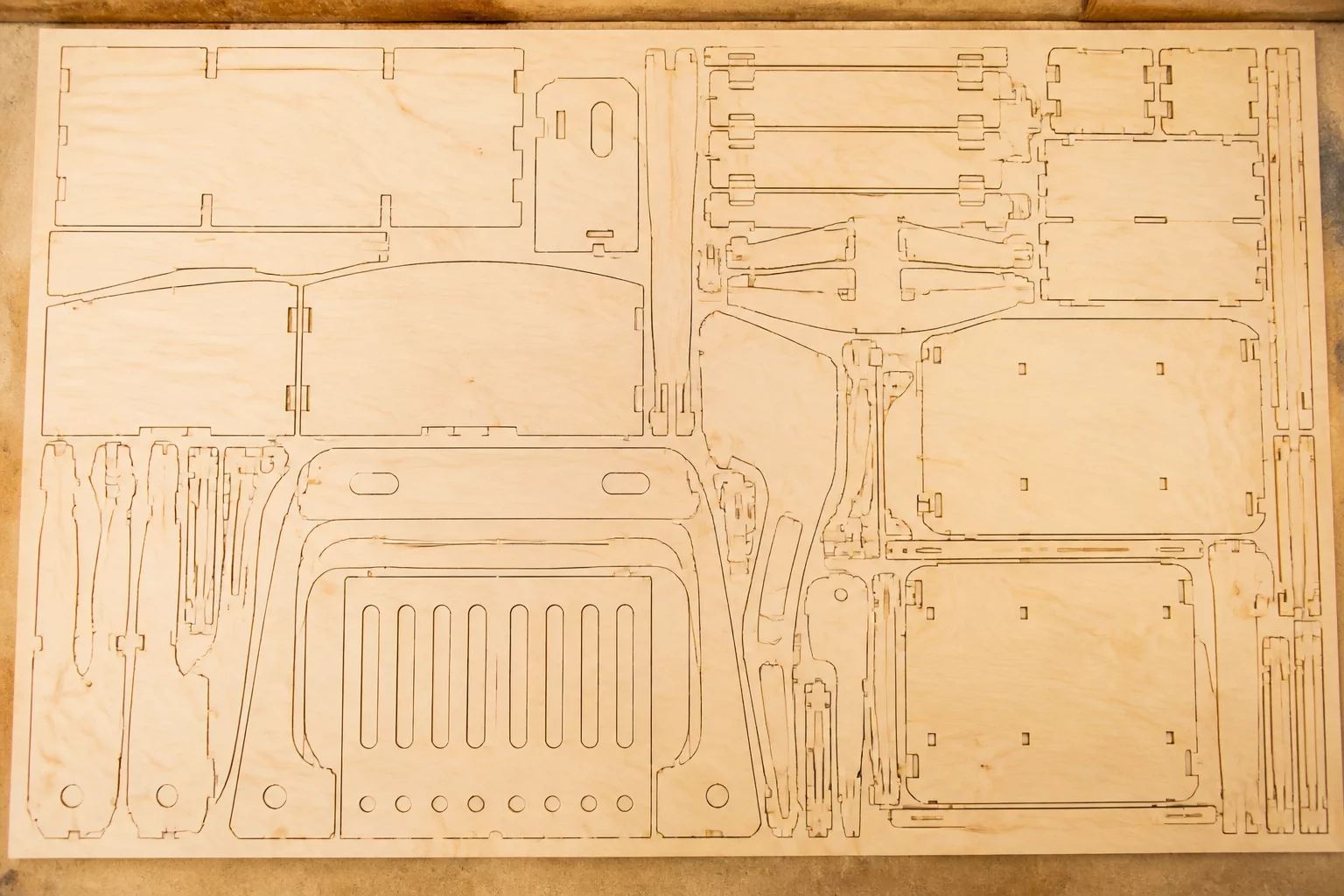
01 Managing Grain Direction and Bit Kerf Tolerances
In high-density timber sheet nesting, the primary difficulty stems from cutting tool dynamics rather than simple bounding box geometry. A standard 6.35 mm (1/4 in) compression spiral bit consumes substantial material on every pass, making tight 2 mm clearances impossible without risking chatter or bit deflection. Furthermore, hardwood veneers and decorative plywood exhibit visible grain vectors, requiring rigid orientation locks for external cabinet panels while allowing internal structural ribs to rotate freely across the 2440 x 1220 mm sheet.
Nesting algorithms frequently attempt to interlock cabinet gables and shelf dividers without considering the structural loss of vacuum bed suction as cuts progress. By partitioning cut files into nested perimeter passes with 0.8 mm onion skins or designated tabs, operators prevent small offcuts from shifting under high rotational spindle torque while extracting maximum square footage from premium hardwood ply.
For delicate workpieces narrower than 120 mm, avoid full through-cuts in the primary toolpath. Program an onion-skin perimeter pass leaving 0.8 mm of backing material intact, followed by a final high-speed cleanup pass to preserve suction pressure across the entire vacuum surface.
Automate Toolpath Spacing & Kerf Offsets
Discover how dedicated offset spacing parameters and nested boundaries eliminate manual calculation errors before sending toolpaths to industrial CNC controllers.
02 Vacuum Table Physics and Cut Sequence Strategy
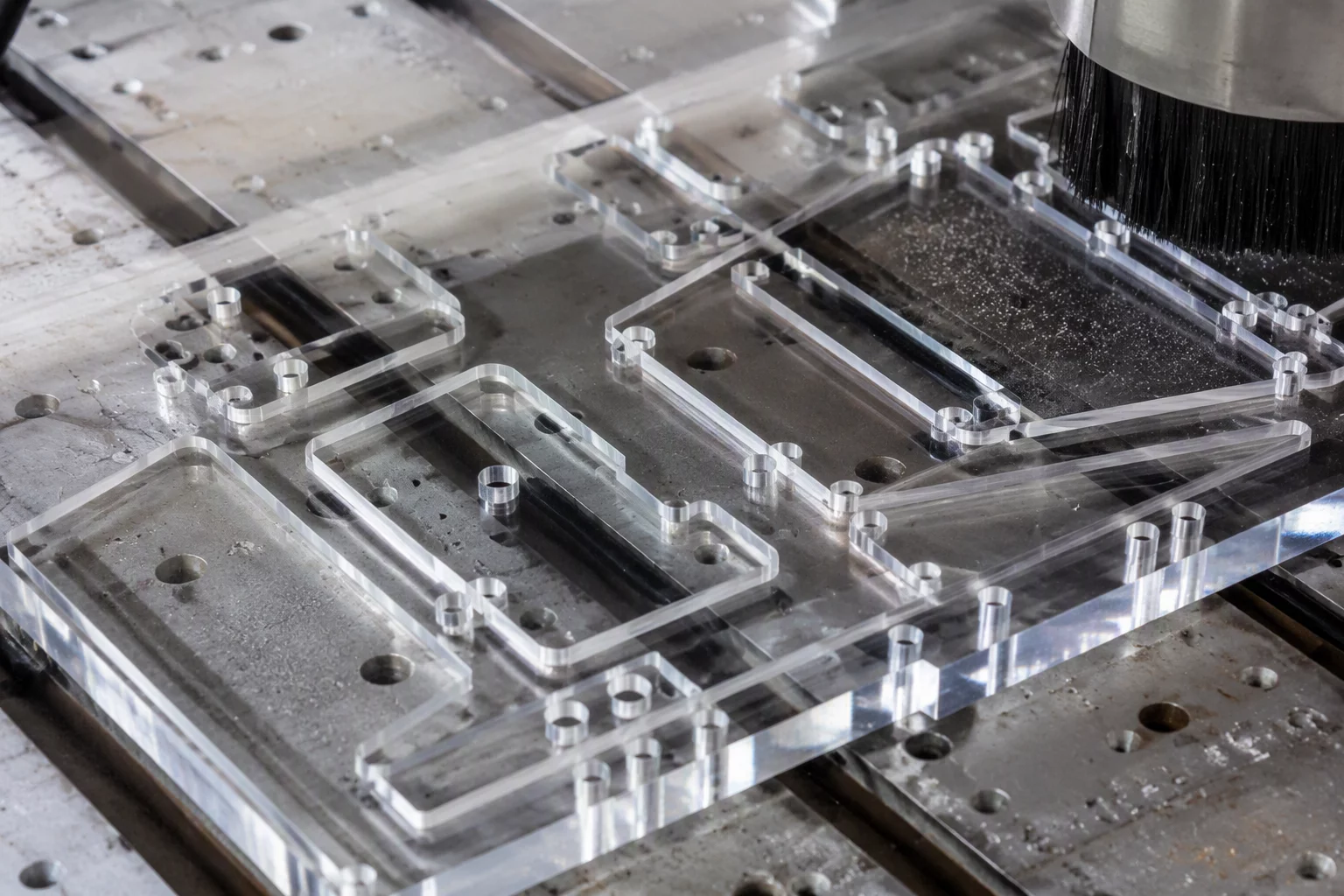
Standard desktop vinyl and paper cutters rely on adhesive cutting mats that provide consistent hold across every square millimeter. In CNC panel routing, however, airflow leakage through previously severed channels reduces clamping force geometrically across open zones. Sequencing cuts from the interior pockets outwards maintains maximum board mass against the spoilboard until the final perimeter drops are released.
Placing large structural gables near the central vacuum plenum zones and nesting smaller drawer components into peripheral interstitial pockets provides stable downward holding force throughout the 18,000 RPM machining cycle.
Always account for cutter bit diameter plus safety lead-in ramps (minimum 1.5x bit diameter) between adjacent contours to avoid overlapping plunge damage on finished veneer edges.
Compare placement, material direction, spacing, and post-cut handling using your actual pieces and sheet boundary.
03 Practical Yield Metrics & Production Verification
Compare placement, material direction, spacing, and post-cut handling using your actual pieces and sheet boundary. Verifying lead-in points, ramp profiles, and dust extraction airflow during initial dry runs guarantees clean edge quality and prevents expensive material waste across multi-sheet cabinetry runs.
High-density woodworking layouts require simultaneous balancing of geometric nesting algorithms, grain orientation rules, toolpath kerf offsets, and vacuum hold-down physics to achieve cost-effective production without part movement or bit breakage.

Workshop Feedback & Results
No comments yet. Be the first to share your workshop result!
Leave Your Workshop Result