
The Geometry of Ten Units: Why One Grid Does Not Fit All
Arranging ten identical labels on a standard cutting sheet sounds trivial until you measure what happens after the blade finishes. Compare placement, material direction, spacing, and post-cut handling using your actual pieces and sheet boundary. When production volumes scale from ten pieces to ten hundred, that unused margin turns into significant scrap material.
We tested ten standard 3x2-inch die-cut packaging labels across three standard material formats: Letter-sized vinyl sheets, 12x12-inch adhesive cardstock, and continuous roll feed. The results demonstrate that maximum nesting density does not always yield the lowest total job cost when factoring machine travel time, weeding friction, and edge margin stability.
Explore interactive cutting challenges where piece orientation, weed box clearances, and mechanical grip margins dictate actual sheet yield.
Breaking Down the Three Core Layout Strategies
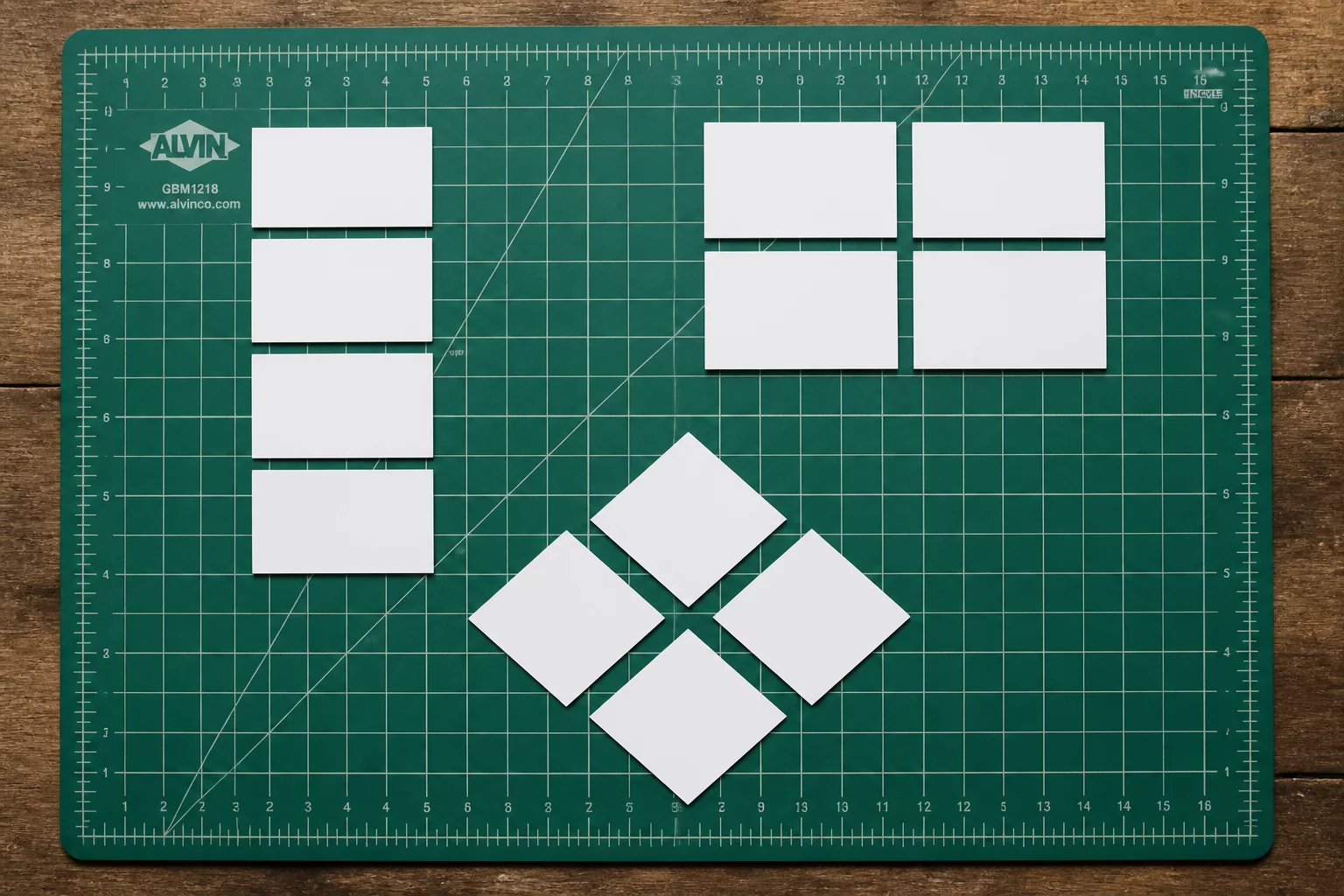
The first strategy relies on uniform rows with fixed column gutters. This keeps the cutter blade moving along continuous straight horizontal passes, minimizing head repositioning cycles and preventing thin vinyl lifting. The second strategy introduces a 50% staggered offset, tucking rounded label corners into adjacent negative voids. This compacts the overall envelope by 14%, freeing a usable strip of unworked scrap for auxiliary graphics.
-
1
Orthogonal Linear Grid: Compare placement, material direction, spacing, and post-cut handling using your actual pieces and sheet boundary.
-
2
Interlocking Staggered Offset: Compare placement, material direction, spacing, and post-cut handling using your actual pieces and sheet boundary.
-
3
Mirrored Rotational Pairs: Balances roll curl tension and isolates weed borders into distinct quadrants, eliminating diagonal tear hazards during rapid vinyl weeding.
The third strategy pairs labels in inverted 180-degree groups. For labels with asymmetric profiles, such as neck tags or tapered jar wraps, rotation cuts waste almost in half. However, running directional substrates like brushed metallic foil or woodgrain requires locking the grain angle, making pure rotational pairing unviable without sacrificing cosmetic consistency.
Selecting the Right Arrangement for Your Production Run
Choose the orthogonal grid when post-cut trimming requires a rotary trimmer or straight shears. Switch to staggered nesting when sheet cost outweighs machine run time. Reserve rotational pairing for asymmetrical shapes on non-directional materials where scrap reduction is the sole priority.
Label Layout Optimization FAQ
Further Layout Case Studies
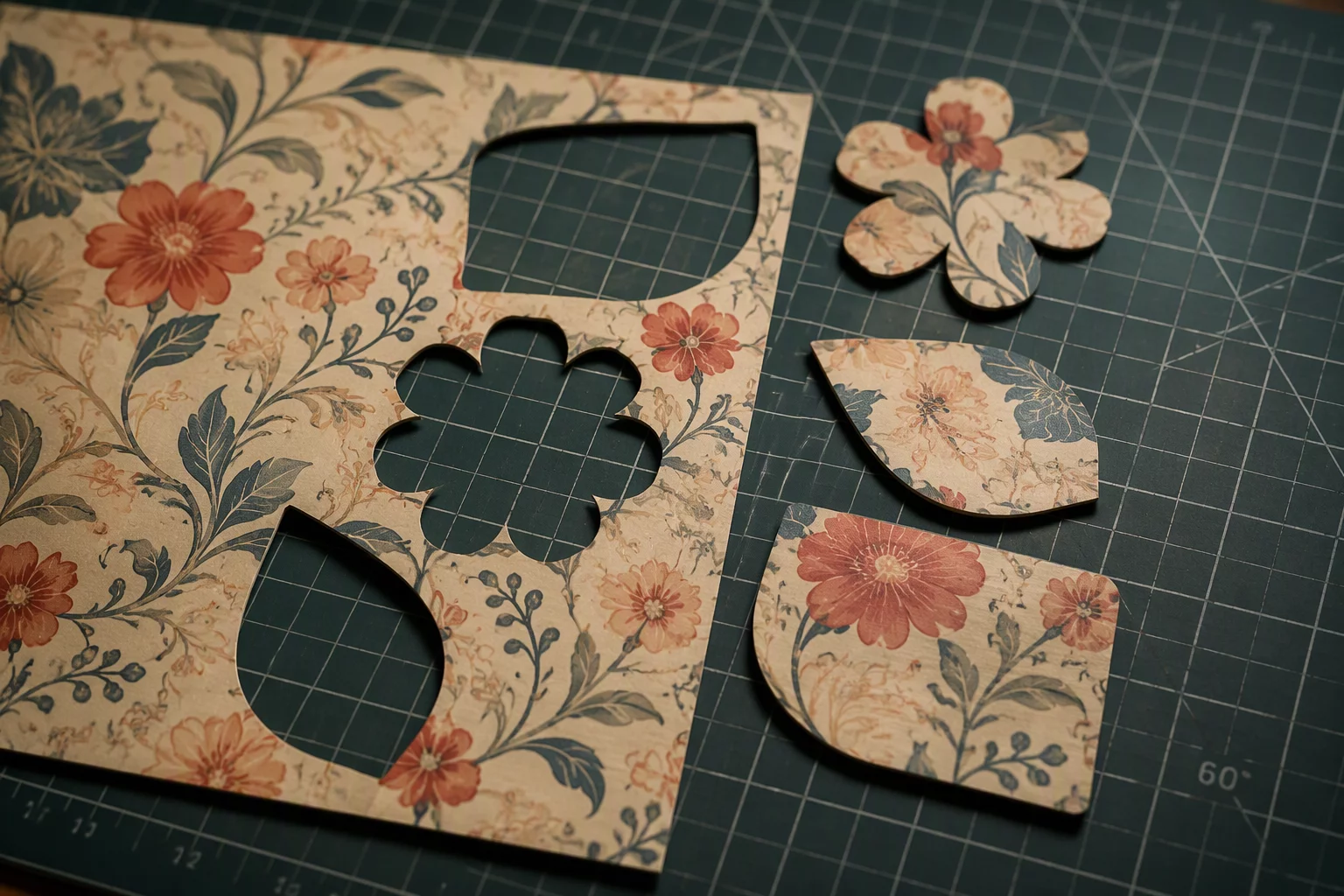
When Rotation Saves Space but Changes Orientation
Examine how directional textures and pattern grain impact material yield when rotating asymmetric vector components.
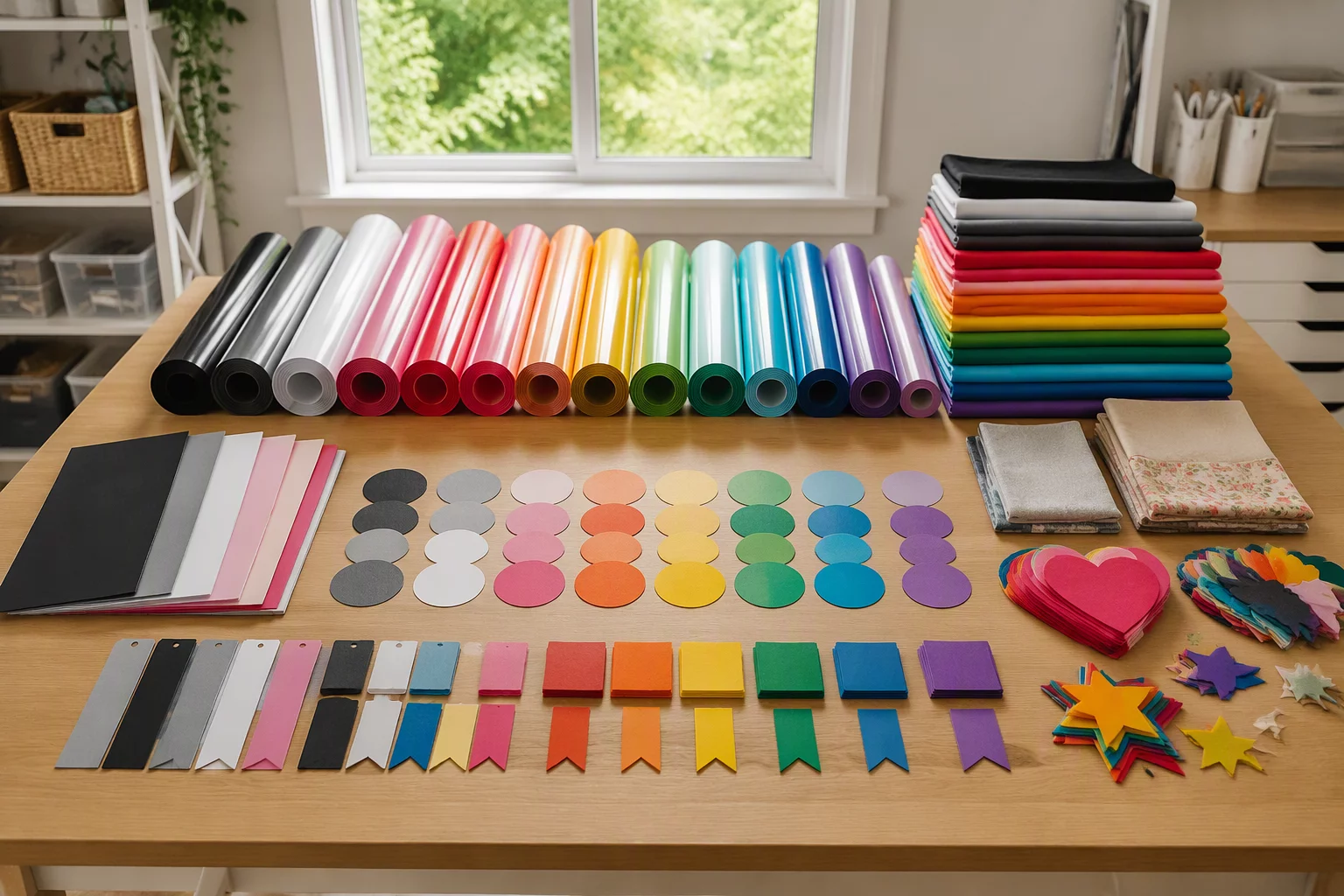
Group by Design or Group by Material?
Discover whether batching cut files by artwork type or by substrate density produces higher long-term workshop efficiency.
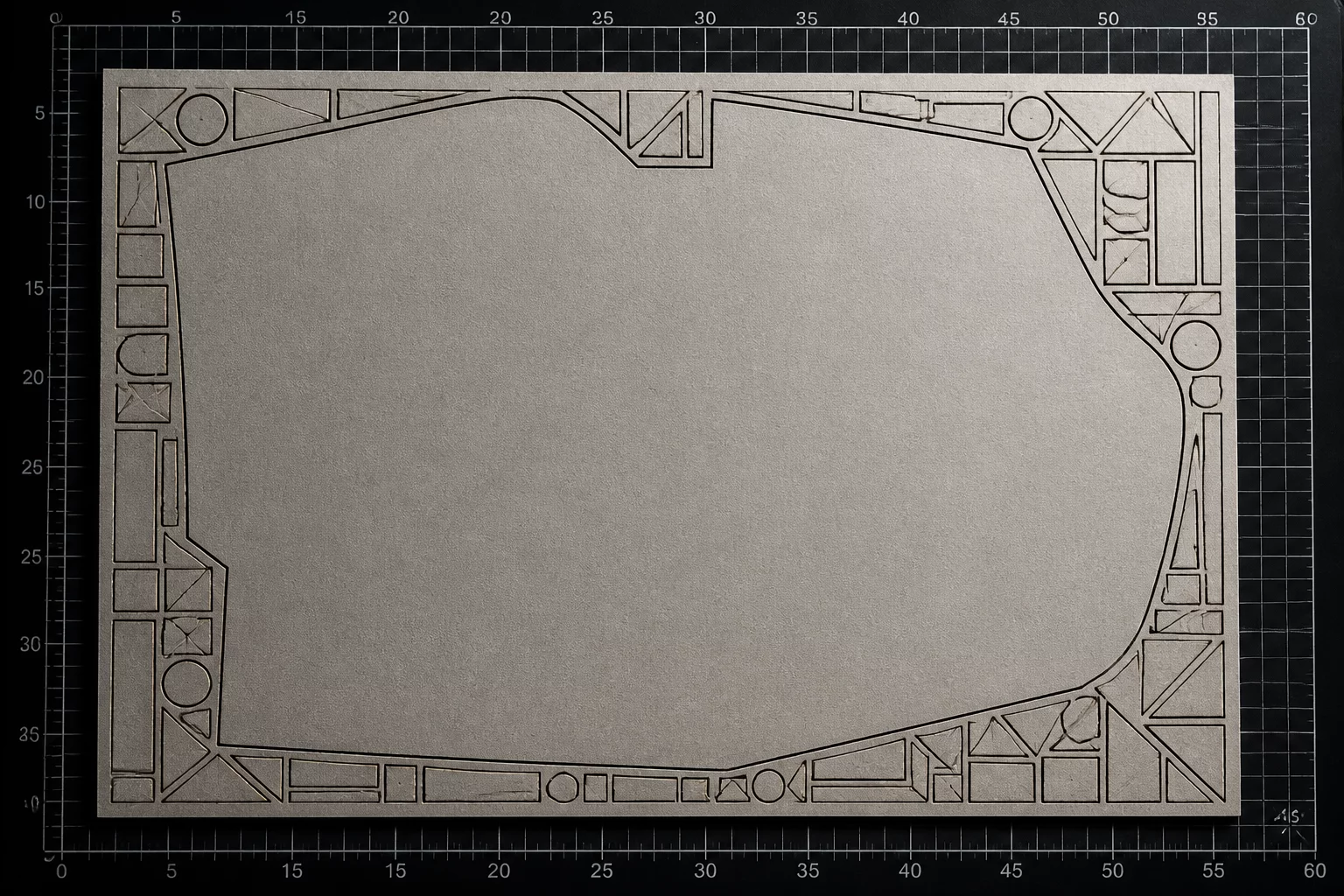
One Large Piece Changes the Whole Sheet
How an oversized anchor graphic reshapes layout boundaries and dictates nested filler placement on sheet stock.
Workshop Feedback & Notes
This completely changed how I look at label placement.
Leave a Comment or Observation
Share your cutting tests, nesting challenges, or workflow feedback.