
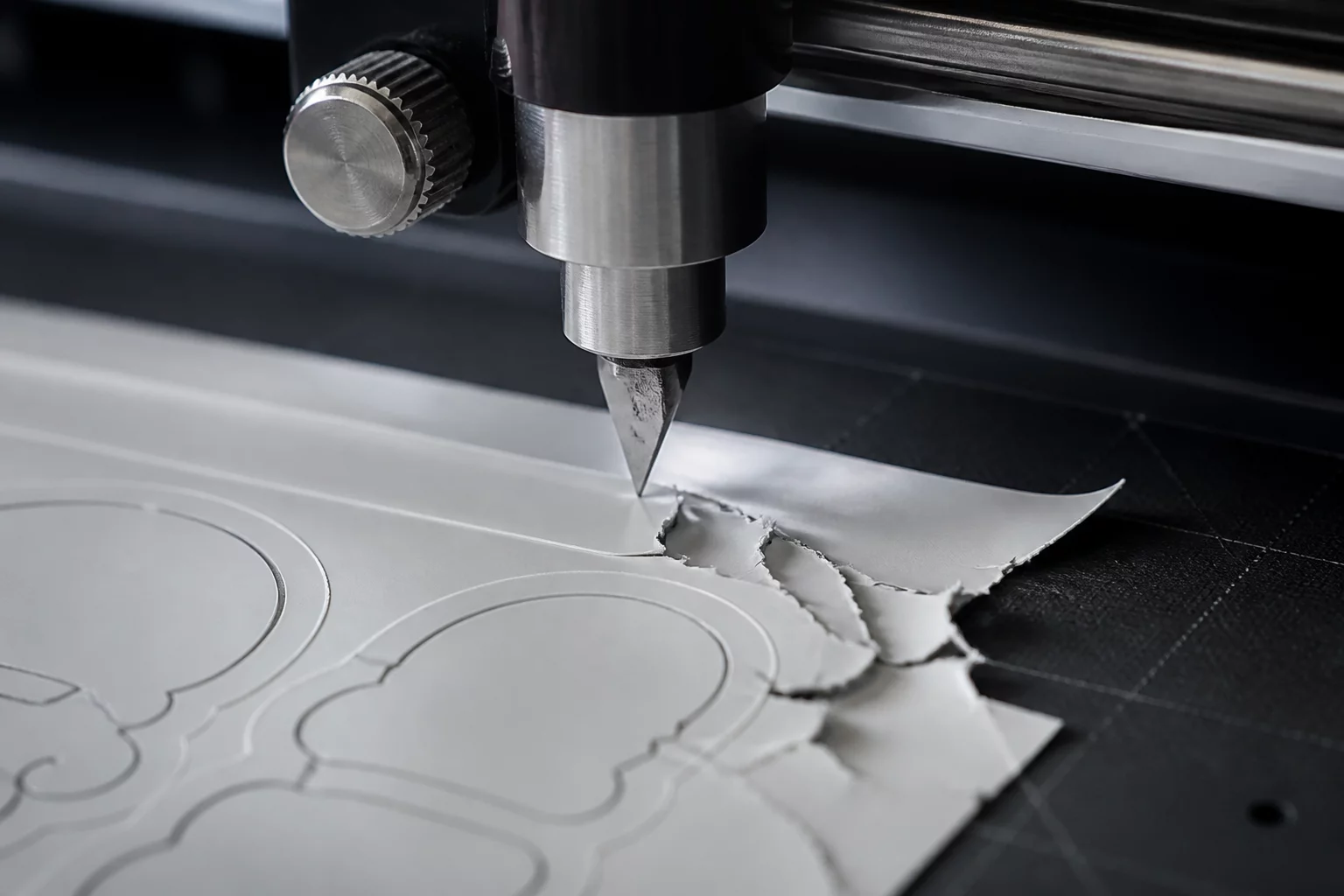
The Hidden Scrap Cost of Boundary Over-Packing
Software nesting algorithms excel at calculating mathematical density. Compare placement, material direction, spacing, and post-cut handling using your actual pieces and sheet boundary. In real-world plotting workflows, however, this calculated density frequently produces catastrophic failure. Sheet margins are not merely empty waste material; they provide essential mechanical grip, structural tension, and lateral stabilization while the cutting carriage operates at full speed.
When a swivel blade turns abruptly near a fragile perimeter, lateral drag pulls the cut carrier upward. If the edge margin is narrower than 5mm to 8mm, the surrounding carrier lacks sufficient mass to resist this pulling force. The blade snags the loose border, folds the backing paper, and shifts the entire material sheet off its alignment axis, ruining every piece remaining on the run.
Explore layout challenges that balance tight piece packing against mechanical roller grip limits.
Pinch Roller Physics and Post-Processing Hazards
Friction-feed cutting plotters depend on pinch rollers gripping the grit shaft underneath the media. Placing vector cutlines inside or right against the roller path severs the structural plane. As the roller passes over a cut contour, it compresses the cut edge unevenly, causing tracking skew of up to 2mm per linear meter.
-
1
Roller Track De-Grip: Cut contours that cross the roller track cause the pinch wheel to momentarily lose downward tension, resulting in diagonal registration drift across the entire sheet.
-
2
Weed Matrix Snapping: Perimeter margins under 4mm rip constantly during manual weeding, turning a continuous single-pull matrix strip into dozens of tedious hand-plucking steps.
-
3
Optical Sensor Misreads: Crowding components within 10mm of print-and-cut registration marks causes optical sensors to misread contrast lines, causing misaligned cuts across every nested shape.
Factoring in a standardized safety border of 8mm to 12mm around the outer material boundaries maintains consistent mechanical grip. While digital sheet yield might read slightly lower, actual workshop yield increases dramatically because entire production sheets are no longer discarded from jams or tracking drift.
Usable Yield Beats Theoretical Nesting Density
Consistently successful cutting operations require dedicated buffer zones. Respect your machine feed tolerances, keep registration sensor clearance clean, and leave sufficient perimeter material for fast, uninterrupted weeding strips.
Common Questions About Cut Margins & Boundaries
Further Layout Case Studies
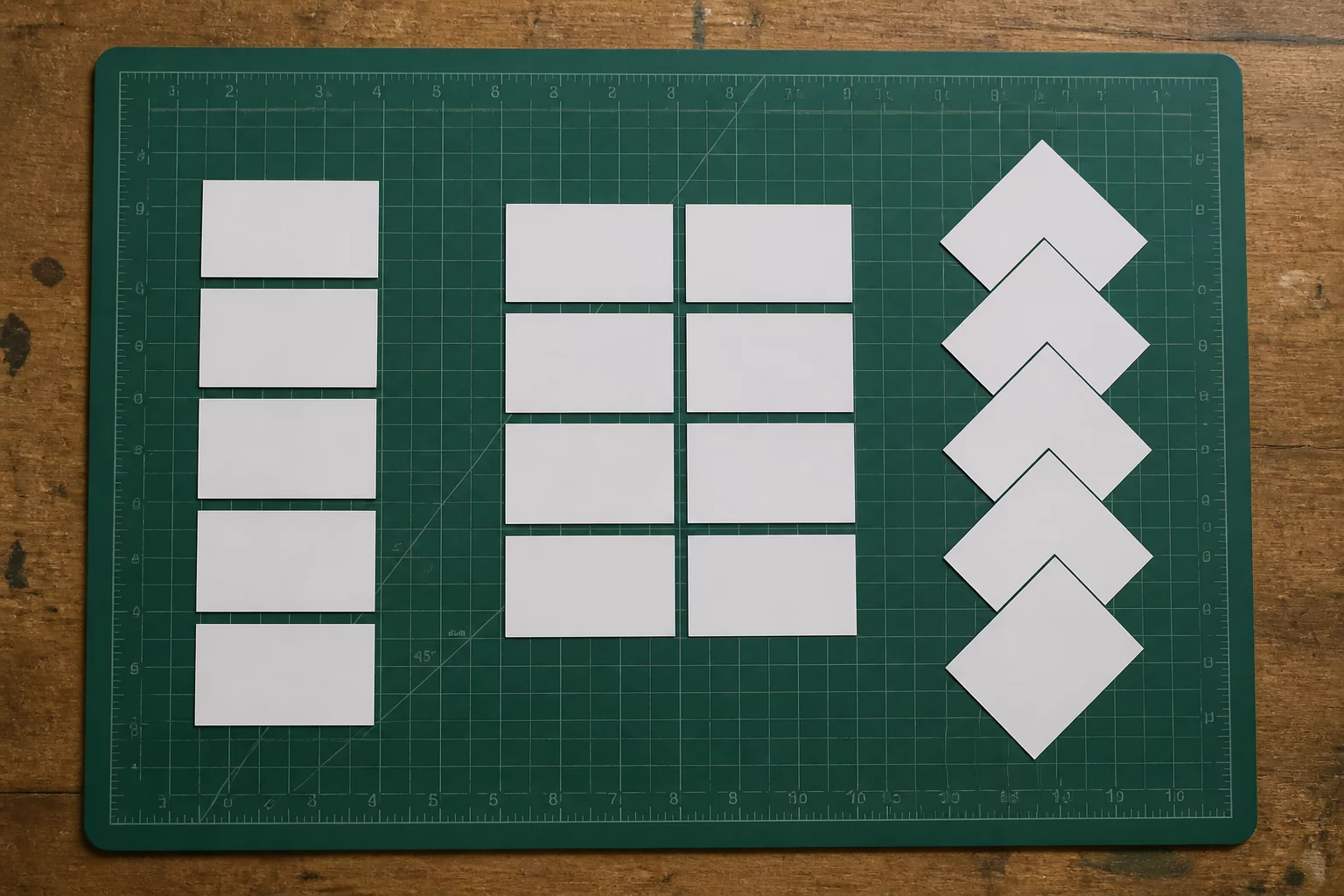
Ten Labels, Three Layout Strategies
Comparing straight grid, interlocking stagger, and nested perimeter cuts on fixed media sheets.
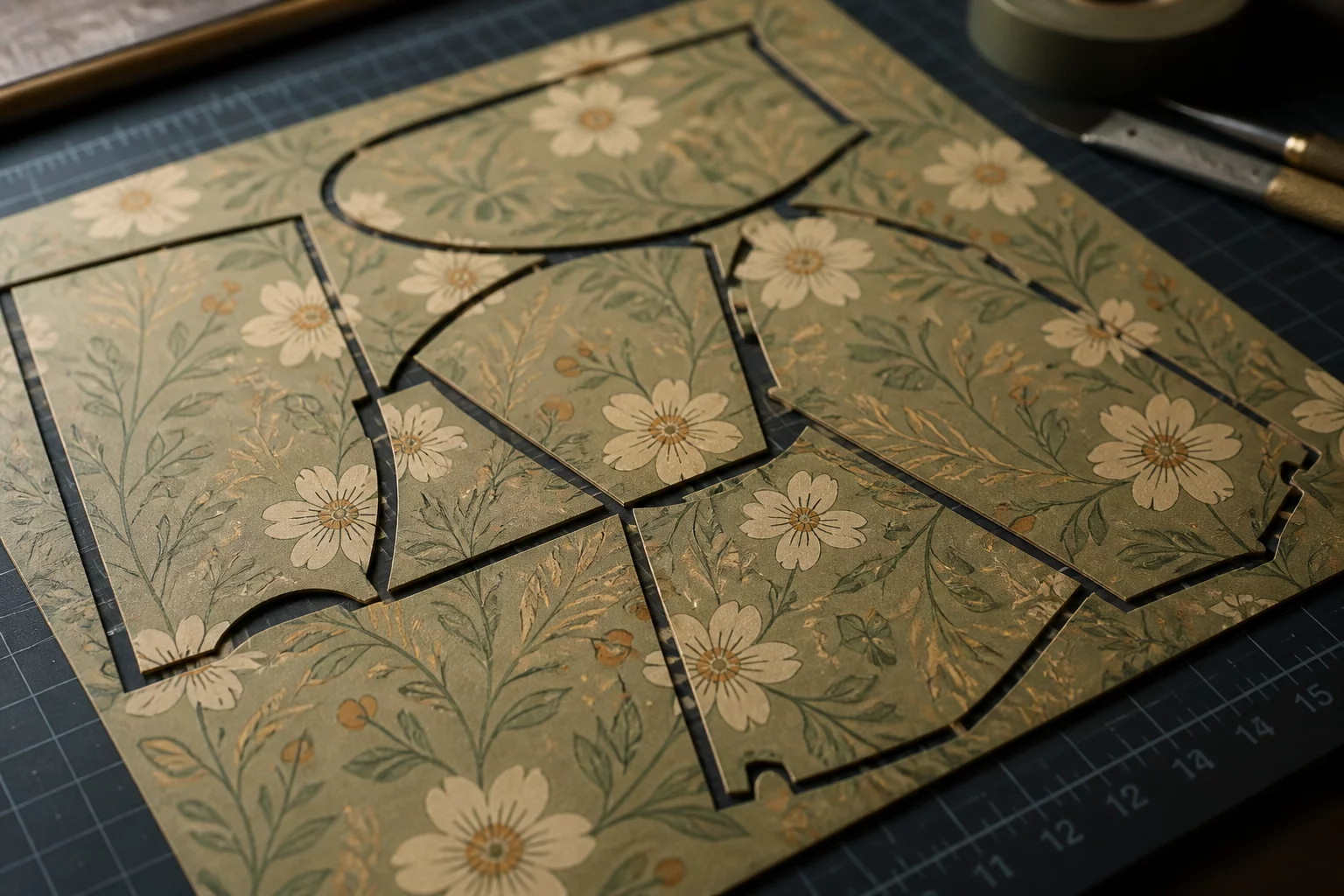
When Rotation Saves Space but Changes Orientation
Understanding when rotating pieces for density compromises grain line alignment and visual flow.
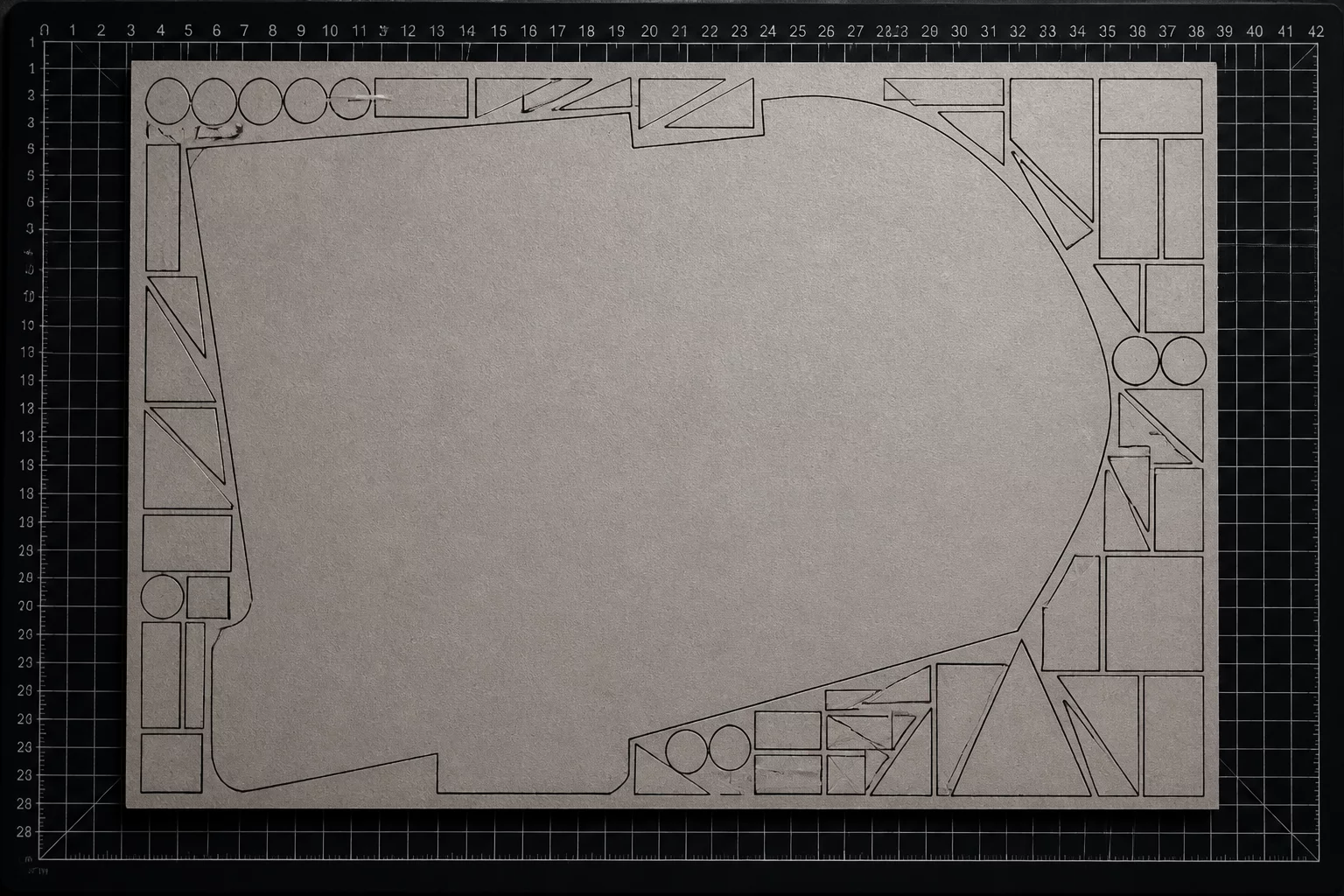
One Large Piece Changes the Whole Sheet
How an oversized component disrupts standard grid nesting and demands dynamic corner packing.
Workshop Feedback & Notes
No comments yet. Be the first to leave a workshop note or observation!
Leave a Comment or Observation
Share your cutting tests, nesting challenges, or workflow feedback.