
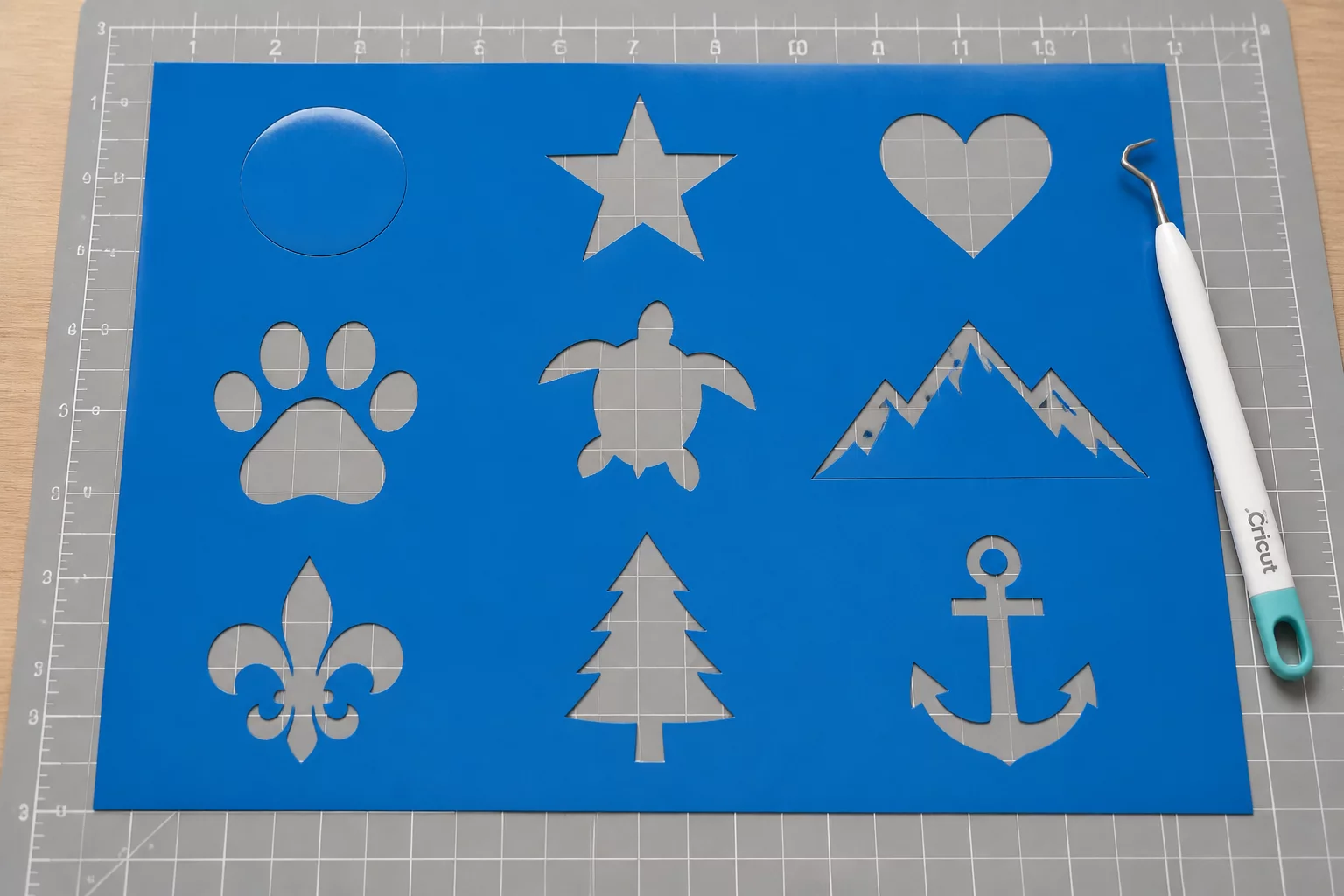
The Hidden Production Bottlenecks of Hyper-Dense Nesting
Automated nesting algorithms evaluate efficiency through a single mathematical metric: percentage of raw sheet area covered by cut paths. In digital design previews, interlocking every curved polygon tightly looks like masterclass optimization. Yet once the blade finishes cutting and the physical substrate lands on your work table, that microscopic gap structure quickly shows its real price.
In self-adhesive vinyl and heat-transfer films, razor-thin borders turn routine weeding into a fragile, high-friction task. When weed lines are crammed against delicate serifs or sharp counter-spaces, pulling the negative matrix in one motion frequently rips fragile edges, dragging finished letters along with the scrap. Leaving deliberate separation alleys requires slightly more vinyl, but it protects finished decals and cuts operator post-processing time in half.
Compare tight automated layouts with structured channel layouts across real cutting scenarios to find your workshop's true sweet spot.
Three Real-World Demands That Overrule Automated Packing
True job profitability depends on the total time spent from software design to finished product handover. When designing production layouts, several physical and organizational factors take precedence over raw nesting ratios.
-
1
Weed Box Partitioning: Adding rectangular cut boundaries around separate piece clusters lets you peel the waste film in fast, bite-sized sections without risking the whole sheet.
-
2
Grain and Sheen Direction: Cardstock grain, brushed foil finishes, and textured vinyl reflect light directional paths; rotating parts arbitrarily causes conspicuous visual mismatches in final assemblies.
-
3
Kitting and Assembly Flow: Arranging cut shapes in logical order or grouping matching project pairs saves minutes of searching through unsorted scrap piles after cutting.
Treating nesting as part of a continuous manufacturing chain rather than an isolated CAD task transforms shop efficiency. Compare placement, material direction, spacing, and post-cut handling using your actual pieces and sheet boundary.
Balancing Nesting Density with Ergonomic Throughput
Always prioritize weeding clearance, material grain, and assembly grouping over extreme nesting density. A clean, well-spaced layout with integrated weeding borders guarantees faster cycle times, fewer ruined pieces, and predictable output.
Nesting Strategy & Weeding Questions
Further Layout Case Studies
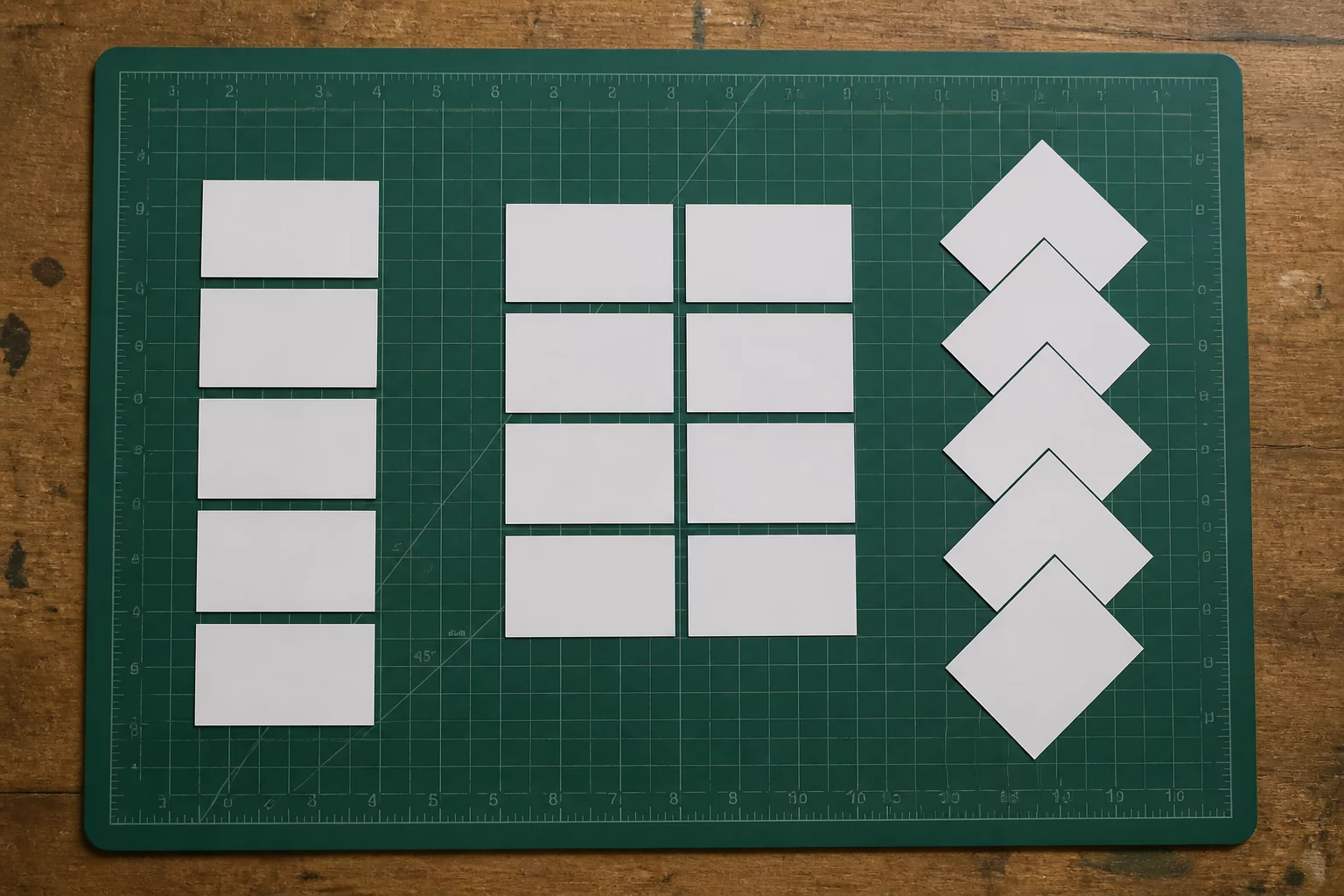
Ten Labels, Three Layout Strategies
Compare uniform grid spacing, staggered nesting, and grouped strip layouts across ten standardized labels.
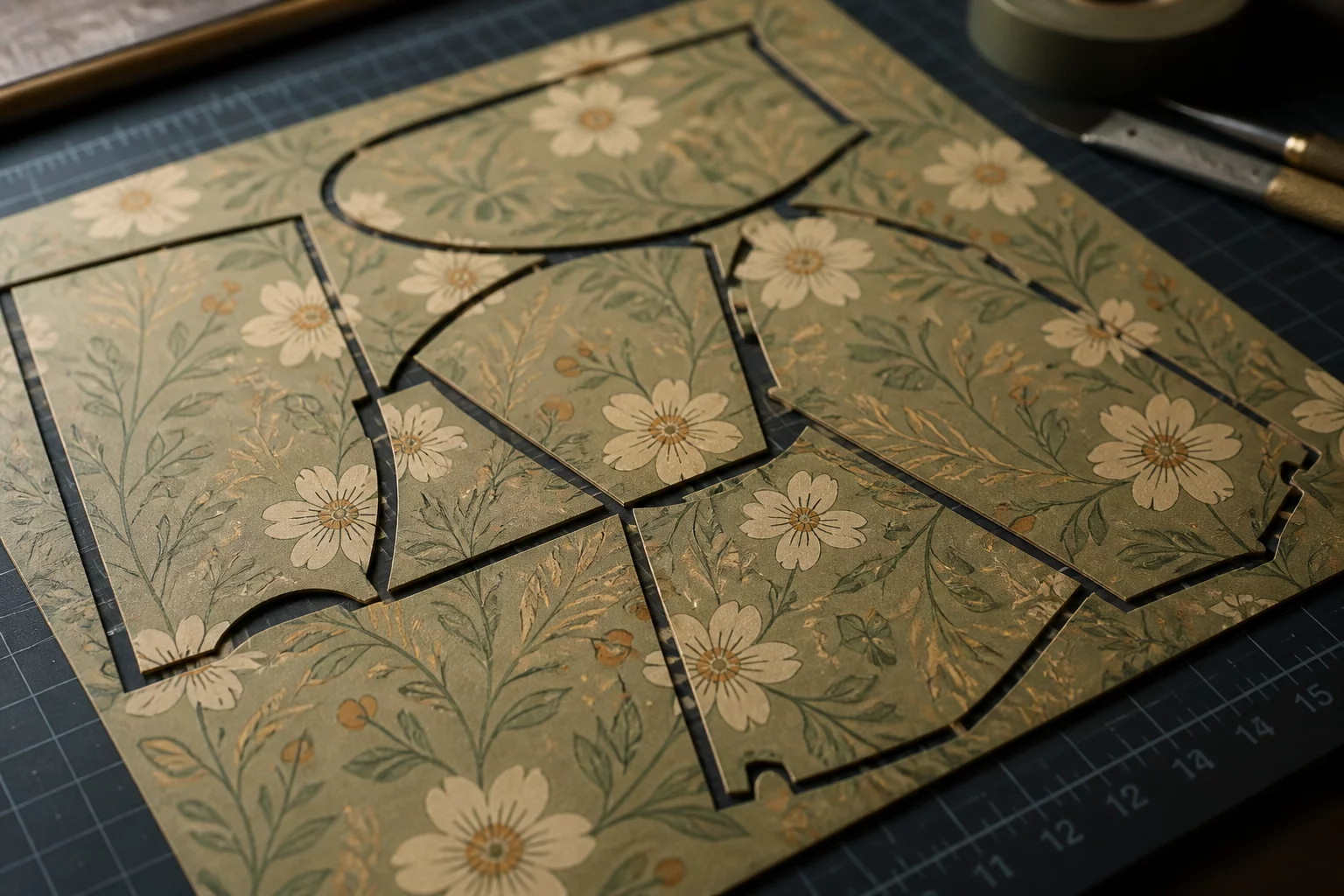
When Rotation Saves Space but Changes Orientation
Understand the trade-offs between rotating parts to save sheet margins versus preserving texture and print orientation.

Group by Design or Group by Material?
Decision rules on grouping cut shapes by customer project kit or clustering by common sheet substrate.
Workshop Feedback & Notes
No notes or comments yet. Be the first to share your observations or workflow tips.
Leave a Comment or Observation
Share your cutting tests, nesting challenges, or workflow feedback.